The Emerge Model
Emerging Adulthood is a widely recognized developmental phase occurring between adolescence and adulthood (approximately ages 18-30 years) in westernized countries. Emerging Adulthood has unique features. For example, instability across all life domains is a central experience of emerging adulthood, as is identity exploration. It also happens to be a time in the human life span with the highest rates of serious mental health condition onset – which makes it a critical time for effective intervention to prevent long-term struggles.
We have partnered with many innovators across the U.S., including Thresholds in Chicago who is an internationally recognized leader in evidence-based practice psychiatric rehabilitation research. Thresholds launched the “Emerge Model” in 2013 to better meet the needs of young adults with serious mental health diagnoses, including those aging out of child residential services. Our research team was part of the initial design, implementation and evaluation of Emerge. Emerge looks like Assertive Community Treatment but with a Positive Youth Development spin. Emerge compliments early psychosis Coordinated Specialty Care (CSC) teams and offers a service alternative for young adults who do not meet criteria for CSC.
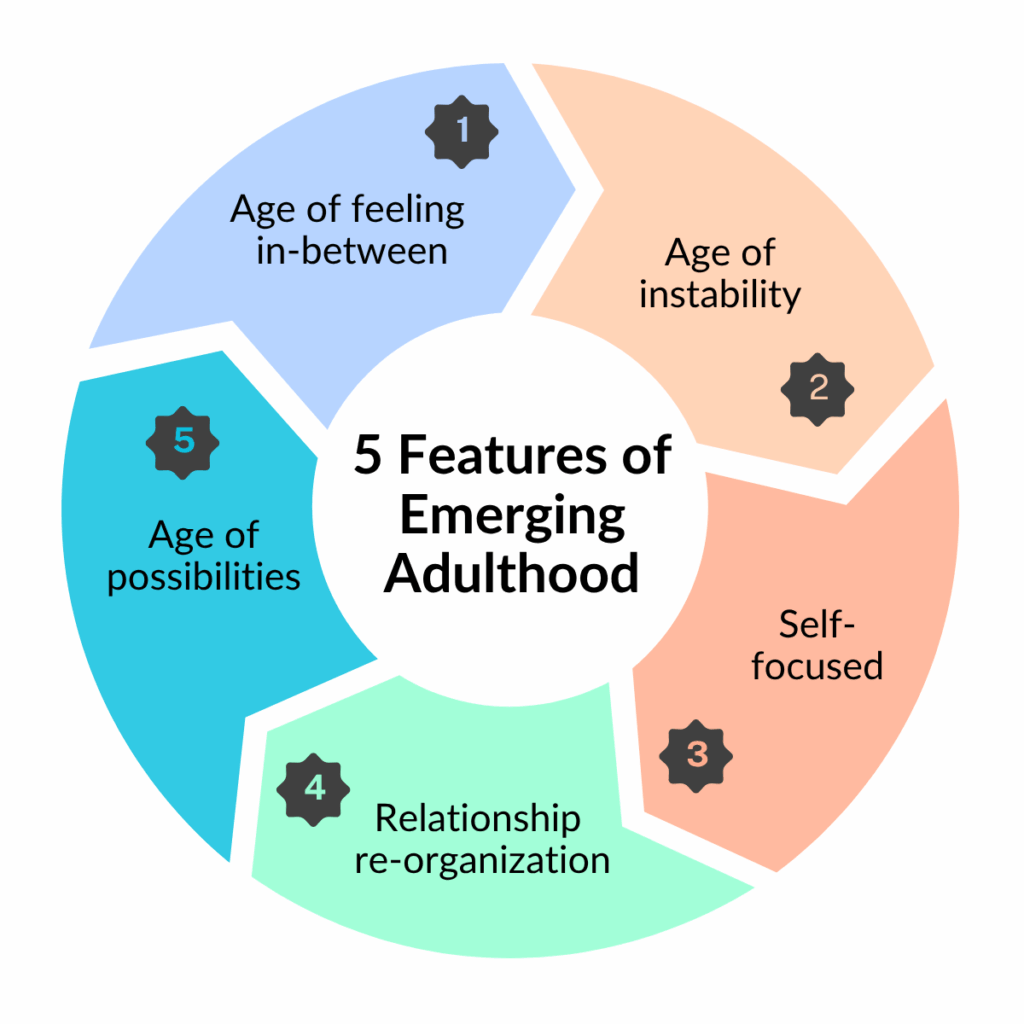
5 Features of Emerging Adulthood
Age of possibilities: Most change possible compared to any other time in the life span, and sense of hope.
Instability: Change is to be expected. Mental health challenges cam make it difficult to navigate instability.
Reorganization of Relationships: Major shift from relying on caregivers to relying on self, friends, & community
Self-Focus: Young people have less adult responsibilities & less oversight, and are focused on figuring out who they are.

Emerge is a multidisciplinary team-based approach that focuses on what matters to emerging adults: social connection and belonging, vocational engagement and career exploration, independent living, identify development, and health and wellness. Emerge uses the Transition to Independence Process (TIP) Model, an evidence-informed Positive Youth Development approach, to unite the multidisciplinary team’s efforts to tailor support based on young people’s evolving needs. Learn more about Emerge Model practice research and implementation below.
New Featured Resource

Click on the image to view our Emerge Advocacy Guidance Tool with information on how to support Transition Age Youth (TAY) with serious Mental Health Diagnoses.
Emerge Research Study
Examining Feasibility of Community-based Multidisciplinary Team-based Model (Emerge) for TAY with Serious Mental Health Diagnoses: Comparing young people’s experiences with Emerge services (community support, care coordination, evidence-based therapies, Peer Support, Supported Employment & Education + prescribing) to those in adult-services-as-usual, and developing a manual, fidelity scale, and training tools for Emerge replication in Illinois and nationally (NIDILRR-funded; 2022-2025).
Emerge Model Study Aims (NIDILRR 90IFRE0063)
- Examine differences in experiences, engagement & outcomes among young adults in Emerge Model vs. Usual Adult Team-Based Services.
- Define what policies, practices, structures, operating procedures & staffing makes an “Emerge” Team distinguishable from an adult team.
- Share insights across scientific, policy, practice & lived experience audiences.
Study Partners



Emerge Peer-Reviewed Publications
Youth & Young Adult Shared Decision, Chapter 9 in Shared Decision Making and Serious Mental Illness (P. W. Corrigan, Ed.). Klodnick, V. V., LaPelusa, B., Johnson, R. P., Mayhue, A., & Cohen, D. A. (2025). Published by the American Psychiatric Association. https://www.apa.org/pubs/books/shared-decision-making-serious-mental-illness.
Select Presentations
Provides mental health professionals with eight research-based reasons why young people ages 16-26 need a different service approach, plus a simple three-step pitch for advocating for those changes at their own organizations, presented at the 2026 Michigan ESMI Summit.
Audience: Michigan TAY & CSC Teams | Year: 2026
Helps teams spot signs of mental health distress in young people ages 16-25, including those with intellectual and developmental disabilities, and offers practical ways to support them at work and connect them to Texas resources, presented by UT Austin researchers.
Audience: Project Search | Year: 2026
Helps professionals build strong working relationships with youth aging out of foster care and teach the soft skills they need to succeed at work and school, as presented at the Texas Workforce Commission Foster Youth Conference.
Audience: Texas Foster Care Agencies | Year: 2025
Discusses how a multidisciplinary team using the Transition to Independence Process (TIP) Model can help young people ages 16-25 with serious mental health conditions reach their own goals in work, school, housing, and relationships. It comes from the Emerge Model, developed at Thresholds in Chicago and studied by researchers at UT Austin, whose findings show participants made goal progress, engaged in work and school, and had fewer psychiatric hospitalizations.
Audience: NYC H+H Leaders & Practitioners | Year: 2025
Helps providers understand how youth aging out of care build a sense of home and navigate new family and friend support, with strategies to support them, based on interviews with 20 youth in Illinois.
Audience: Foster Care Mental Health Advocates | Year: 2023
Shares what young people say they want from mental health care and how the Emerge Model at Thresholds put those preferences into practice, including research on what happens when youth move from child to adult services.
Audience: Foster Care Mental Health Advocates | Year: 2023
Shows how combining research and practice can transform community mental health for young people, featuring a longitudinal study of vulnerable young adults at Thresholds and newly funded projects.
Audience: Fienberg Psychiatry Residents & Faculty | Year: 2023
Virtual best Gives youth mental health teams research findings and a best-practice guide for safely and effectively blending virtual and in-person services, based on studies in Texas and Illinois.
Audience: International Youth Mental Health Advocates | Year: 2022
Shares research on why vulnerable young people stay in or drop out of community mental health services, including during the move to adult care, and what providers can do to keep them engaged.
Audience: NIMH funded researchers | Year: 2022
Teaches clinicians a discovery-oriented approach to engaging young adults with serious mood and anxiety disorders, drawing on the Emerge Model developed at Thresholds, where about 90% of participants avoided or had fewer hospitalizations.
Audience: Psychiatrists & Mental Health Professionals | Year: 2022
Offers a fresh way of thinking about engagement and practical strategies to help community teams better connect with young adults with serious mental health needs, based on research on the Emerge team at Thresholds.
Audience: Mental Health Professionals & Researchers | Year: 2019
New York Health + Hospitals TAY Team Implementation
- Supported by $4 million from MetroPlusHealth, the new NYC Health + Hospitals TAY Teams will provide comprehensive multidisciplinary mental health care with adolescents and young adults – starting with 2 sites: Queens & Woodhall/Brooklyn
- Since 2024, our team has provided consultation and training to New York Health + Hospitals on implementing Transition Age Youth Multidisciplinary teams
- NYC.gov Press release: https://www.nychealthandhospitals.org/pressrelease/mamdani-administration-announces-new-youth-clinics-at-nyc-health-hospitals-woodhull-and-queens/
- NYC.gov Ribbon cutting video with Mayor Mamdani: https://www.youtube.com/watch?v=sGwqJjtWofA